


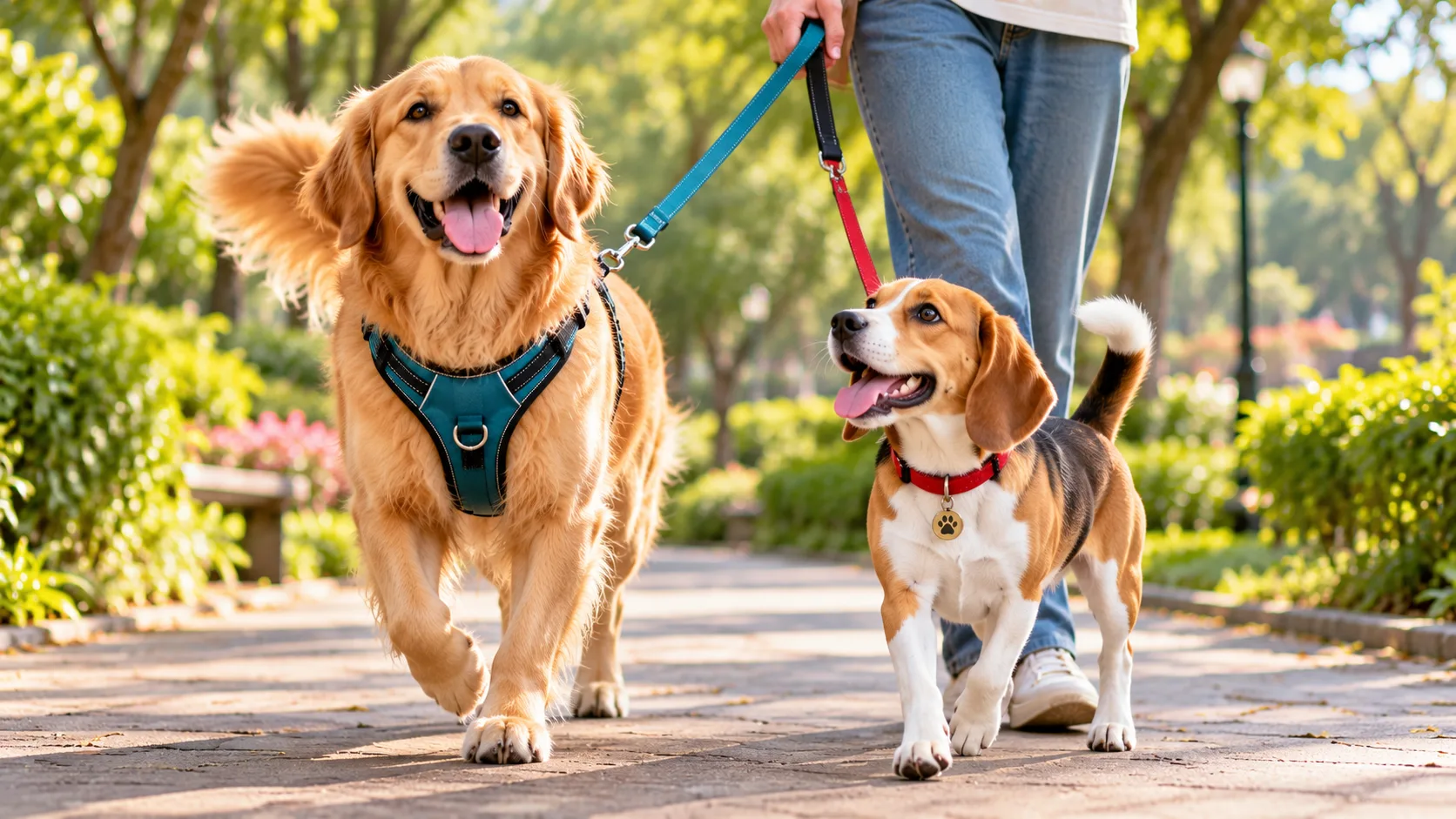
Collar or Harness? Find the Pawfect Walking Gear for Your Furry Best Friend! 🐕🐾
Every walk is a little adventure, but is your furry friend wearing the right gear? From playful puppies and energetic explorers to calm seniors, choosing between a collar and a harness can make a big difference in comfort, control, and safety. Discover the benefits of each, how to find the perfect fit, and what makes every tail-wagging walk a happy one!
Collar or Harness? Find the Pawfect Walking Gear for Your Furry Best Friend!
Because every happy walk begins with comfort, care, and a little wagging tail! 🐾
Every Walk Deserves the Right Start
Picture this: It's a beautiful morning, your dog is waiting excitedly by the door, their tail is wagging, and those adorable eyes are saying just one thing—"Walkies, please!"
But before stepping outside, there's one important question every pet parent should consider: Should your dog wear a collar or a harness?
Both are popular walking accessories, but they serve different purposes. The right choice depends on your dog's size, breed, behaviour, health, and daily activities.
A collar may be convenient for identification and calm walks, while a harness can distribute leash pressure across the body and reduce direct strain on the neck.
At Kozac – Place for Pets, we believe that walks should be more than daily exercise. They should be moments of discovery, bonding, comfort, and happiness.
Let's explore how to choose the right walking gear for your four-legged companion!
1. Dog Collars: Simple, Classic & Convenient
A dog collar is one of the most familiar pet accessories. It fits around your dog's neck and can hold identification tags containing important contact information.
Collars are lightweight, easy to put on, and available in different materials, widths, and designs.
Why Pet Parents Love Collars
- Everyday convenience: Easy to wear and remove.
- Identification: Provides a convenient place for ID tags.
- Lightweight design: Often comfortable for dogs that tolerate collars well.
- Simple handling: May work for calm, loose-leash walkers when properly fitted.
Things to Keep in Mind
A collar can place pressure on the neck when a dog pulls or lunges.
Dogs with breathing difficulties, certain neck conditions, or a tendency to pull may benefit from a harness instead.
Avoid using collars to jerk, choke, or punish a dog.
Kozac Tip: A properly fitted flat collar should be snug enough to prevent slipping but loose enough to avoid pressure or rubbing. The common two-finger check is a useful starting point, but always consider your dog's size and collar design.
2. Dog Harnesses: Comfort Meets Control
A harness fits around your dog's chest and torso rather than relying on the neck alone.
Many pet parents prefer harnesses for dogs that pull, small breeds, puppies, and dogs that need extra support.
Why Harnesses Can Be a Great Choice
- Reduced neck pressure: Leash forces are distributed across the body.
- Improved handling: Certain designs offer additional control.
- Extra security: Some harnesses are designed for dogs that may slip out of collars.
- Comfortable walking: A well-fitted design can support enjoyable daily walks.
Things to Keep in Mind
Not every harness fits every dog.
Poorly positioned straps may cause rubbing or interfere with natural shoulder movement. Some harnesses can also be escaped if they are too loose.
Choose a design that fits securely without restricting movement.
Kozac Tip: Look for adjustable straps, smooth materials, sturdy buckles, and a design that allows your dog to walk naturally.
3. Collar vs. Harness: What's the Difference?
Both options can be useful, but they have different strengths.
FeatureCollarHarnessBest useIdentification and calm walksWalking and additional controlPressure areaNeckChest and torsoEase of useUsually quick to put onMay take more adjustmentPulling dogsCan strain the neckOften a better choiceID tagsConvenientCan also carry tagsFit requirementsSecure neck fitSecure chest and body fit
The takeaway: A harness is often preferable for dogs that pull, while a flat collar can remain useful for identification. Many dogs benefit from having both.
4. Choosing the Right Gear for Puppies 🐶
Puppies are curious little explorers who are still learning how to walk comfortably on a leash.
A lightweight, adjustable harness may help reduce neck pressure during early leash training.
Choose soft, durable materials and check the fit regularly as your puppy grows.
Introduce the equipment gradually using treats, praise, and short positive sessions.
Never force a frightened puppy into unfamiliar walking gear.
Kozac Tip: Puppies grow quickly, so check strap adjustments frequently rather than assuming last month's fit is still comfortable.
5. What About Energetic Dogs Who Love to Pull?
Some dogs become so excited during walks that they rush ahead without noticing the tension on their leash.
A well-fitted front-clip harness may help some handlers manage pulling, but it is not a substitute for training.
Teach loose-leash walking through positive reinforcement and reward your dog for staying near you.
Avoid equipment that causes pain, restricts breathing, or forces unnatural movement.
Remember: The goal isn't simply to control your dog. It's to help them enjoy calm, safe walks with you.
6. Special Care for Small Breeds and Senior Dogs ❤️
Small dogs may have delicate neck structures, making direct collar pressure less desirable during walks.
A lightweight, properly fitted harness is often a practical choice.
Senior dogs may need additional comfort, especially if they experience arthritis, reduced mobility, or other health conditions.
Look for easy-to-adjust equipment that doesn't rub sensitive areas.
For dogs with mobility difficulties, consult your veterinarian about supportive harnesses designed for their needs.
7. How to Find the Pawfect Fit
Even the best-quality walking gear can become uncomfortable if it doesn't fit correctly.
Before purchasing, measure your dog according to the manufacturer's sizing instructions.
Collar Fit Checklist
- Sits comfortably around the neck.
- Does not press against the throat.
- Cannot easily slip over the head.
- Does not cause rubbing or skin irritation.
Harness Fit Checklist
- Fits securely around the chest and torso.
- Allows natural shoulder and leg movement.
- Does not rub behind the front legs.
- Has sturdy, properly fastened buckles.
- Cannot easily twist or slip off.
Always supervise your dog when introducing new equipment.
Kozac Tip: Never choose walking accessories based on appearance alone. Comfort and safety should always come first.
8. Material Matters: Comfort in Every Season
India's changing weather conditions can influence which walking accessories are most comfortable.
During warm or humid weather, lightweight and breathable materials may help reduce discomfort.
For rainy walks, quick-drying materials can be easier to maintain.
Inspect collars, harnesses, and leashes regularly for worn stitching, damaged clips, or weakened straps.
Clean and dry equipment according to the manufacturer's instructions.
A little maintenance can help prevent unexpected failures during walks.
9. Make Every Walk a Happy Adventure! 🌿
The right gear is only one part of a great walking experience.
Dogs also need opportunities to sniff, explore, exercise, and spend meaningful time with their humans.
Choose walking routes appropriate for your dog's age and fitness.
Avoid extremely hot pavement, carry drinking water when needed, and allow regular breaks.
Most importantly, pay attention to your dog's body language.
A relaxed, curious dog is more likely to enjoy the experience than one who is uncomfortable or overwhelmed.
So, Collar or Harness? Here's the Pawfect Answer!
There isn't one perfect accessory for every dog.
For identification and everyday convenience, a properly fitted flat collar can be useful.
For walks—especially with dogs that pull, have sensitive necks, or need additional handling support—a well-fitted harness is often the better option.
Many pet parents choose to use a collar for identification and a harness for attaching the leash.
Whatever you choose, the most important things are proper fit, gentle handling, and your dog's comfort.
At Kozac – Place for Pets, we believe every walk should begin with care and end with a happy tail wag.
Because the best adventures aren't about how far you go—they're about the paws walking beside you! 🐾❤️
Explore collars, harnesses, leashes, and everyday walking accessories at Kozac.in.
Disclaimer: This article provides general pet-care information. Consult a veterinarian or qualified reward-based trainer for advice specific to your dog's health or behaviour.
Kozac Editorial Team
We're a passionate team of pet lovers at Kozac – Place for Pets, dedicated to making every walk, wag, and wonderful moment more special! From practical pet-care guides and product tips to fun lifestyle ideas and helpful advice, we aim to make pet parenting simpler, safer, and full of happiness. Because at Kozac, we believe every furry companion deserves comfort, care, and a lifetime of pawfect adventures! 🐾

0 Comments